
Explore the
Romans

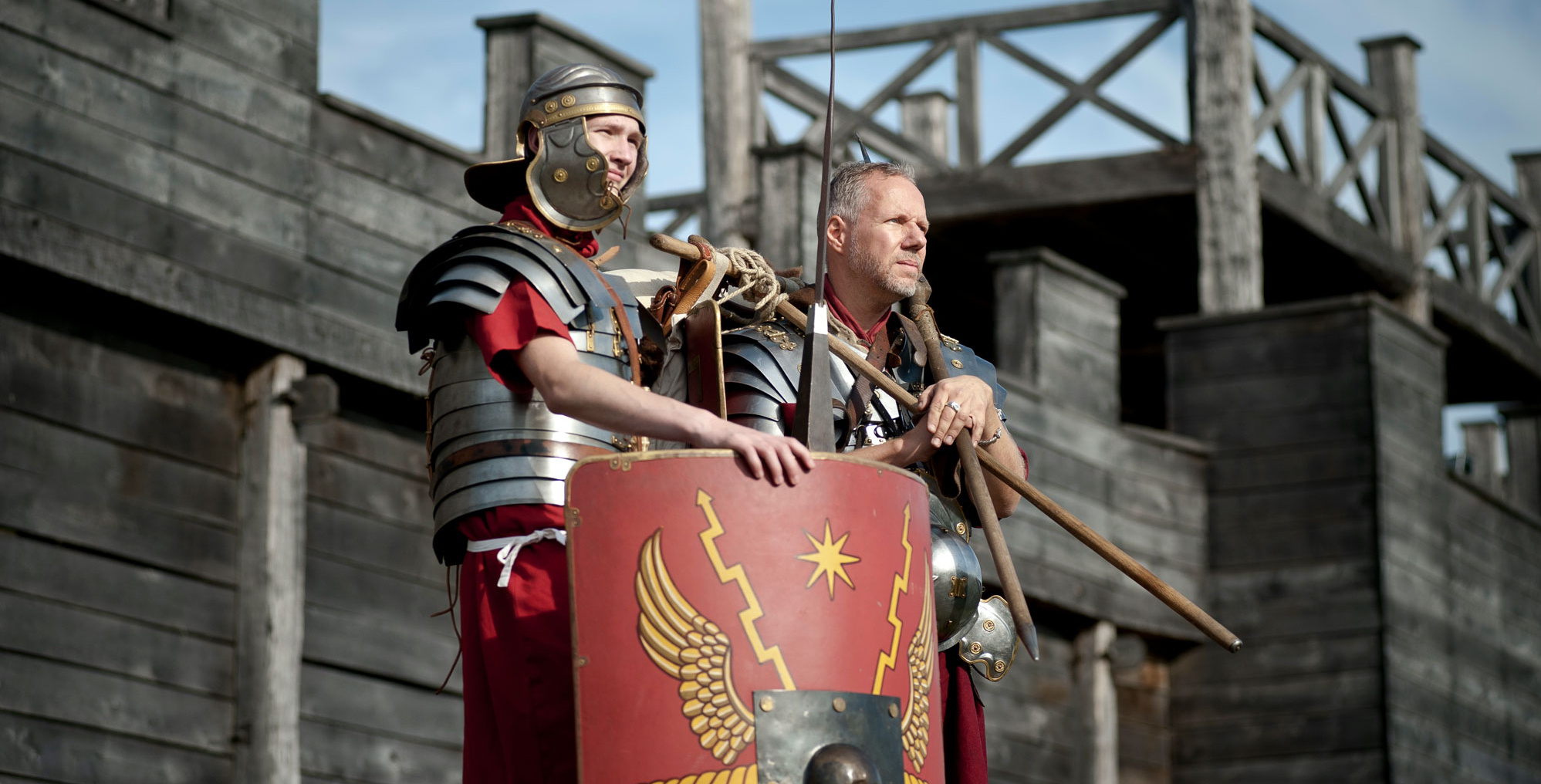
Twee legionairs op wacht in het Romeinse kamp Haltern

Whether through towns, streets or buildings - the Romans left their mark on North Rhine-Westphalia for almost 500 years. This is still visible almost everywhere today.

At roemer.nrw you will find everything about life in the Roman era in North Rhine-Westphalia.

Discover exciting archaeological sites, museums and discoveries - and perhaps you will see your own town in a whole new light!


You can not miss this

Vicus Rimburg

Schloß Rimburg, Bruchhausener Straße 7
52531 Übach-Palenberg
Deutschland

Römische Straßensiedlung vom 1.-4. Jh. beidseits der Wurm mit Töpferöfen und Holzbrücke.

N 50°54'54" E 6°5'19"
> Learn more

Badehaus einer villa rustica

Naherholungsgebiet Wurmtal, In der Schley 70
52531 Übach-Palenberg
Deutschland

Überreste des Badehauses eines römischen Gutshauses aus dem 2./3. Jh. Bild: Andreas Hillebrecht, CC BY-SA 3.0

N 50°55'48" E 6°5'35"
> Learn more

Sarkophag

Südfriedhof, Höninger Platz
50969 Köln
Deutschland

Römischer Sarkophag des 4. Jh., verm. zugehörig zu römischem Gutshof am Raderthalgürtel 3.

N 50°54'2" E 6°56'38"
> Learn more

Lippisches Landesmuseum Detmold

Ameide 4
32756 Detmold
Deutschland

Das Lippische Landesmuseum ist das größte und älteste Regionalmuseum Ostwestfalen-Lippes und liegt im Zentrum von Detmold gegenüber dem Weserrenaissanceschloß der Fürsten zu Lippe.

Gegründet 1835 als Naturhistorisches Museum entwickelte es sich bis heute zu einer großartigen Sammlung lippischer und außerlippischer Kulturgüter aus den Bereichen Naturkunde, Ur- und Frühgeschichte, Landesgeschichte, Volkskunde, Kunst, Möbeldesign sowie Kulturen der Welt.

N 51°56'14" E 8°52'36"
> Learn more

Stadtmauer und wiederaufgestellter Keller

Kurt-Hackenberg-Platz 2
50667 Köln
Deutschland

Außerhalb der Stadtmauer wiedererrichteter Keller, der ursprünglich zu einem römischen Privathaus innerhalb der Stadt gehörte und an der Nord-Süd-Hauptstraße lag.

N 50°56'25" E 6°57'35"
> Learn more

Matronentempel

Krausstraße 2, Zingsheim
53947 Nettersheim
Deutschland

Überreste/Teilrekonstruktion des Matronentempels "Vor Hirschberg"

N 50°30'33" E 6°39'21"
> Learn more

Turmteile Stadtmauer

Griechenpforte
50676 Köln
Deutschland

Teile eines Turms sind an der Griechenpforte erhalten

N 50°55'50" E 6°56'51"
> Learn more

Turm und Teilstück Stadtmauer

Verkehrsinsel Komödienstr./Ecke Tunisstr.
50667 Köln
Deutschland

Bis zum Fundament sichtbarer Turm und Teilstück der römischen Stadtmauer Kölns; namensgebend ist die Familie Lysolph, die im Mittelalter den Turm bewohnt haben soll.

N 50°56'30" E 6°57'10"
> Learn more

Römisches Militärlager

Römerlager Olfen, Zum Krähenbusch
59399 Olfen
Deutschland

Römisches Standlager aus der Zeit zwischen 11 v. Chr. – ca. 8/7 v. Chr. (Feldzüge des Drusus) mit trapezförmigem Grundriss und einer Innenfläche von ca. 5,4 ha. Die Lagerumwehrung bestand aus einem Spitzgraben und einer Holz-Erde-Maue, die Innenbebauung aus Lehmfachwerkbauten.

N 51°41'23" E 7°21'2"
> Learn more

Abwassersammler

Kleine Budengasse / Theo-Burauen-Platz
50667 Köln
Deutschland

Römischer Originalbefund, leicht transloziert: Auf dem Platz steht ein Teilstück der Abwasserleitung, die unter der Kleinen Budengasse verläuft.

N 50°56'21" E 6°57'32"
> Learn more
Do you know more Römer offers?

We look forward to receiving your tips and photos to
roemer [at] mhkbd.nrw.de (roemer[at]mhkbd[dot]nrw[dot]de) !
Romans in North Rhine-Westphalia
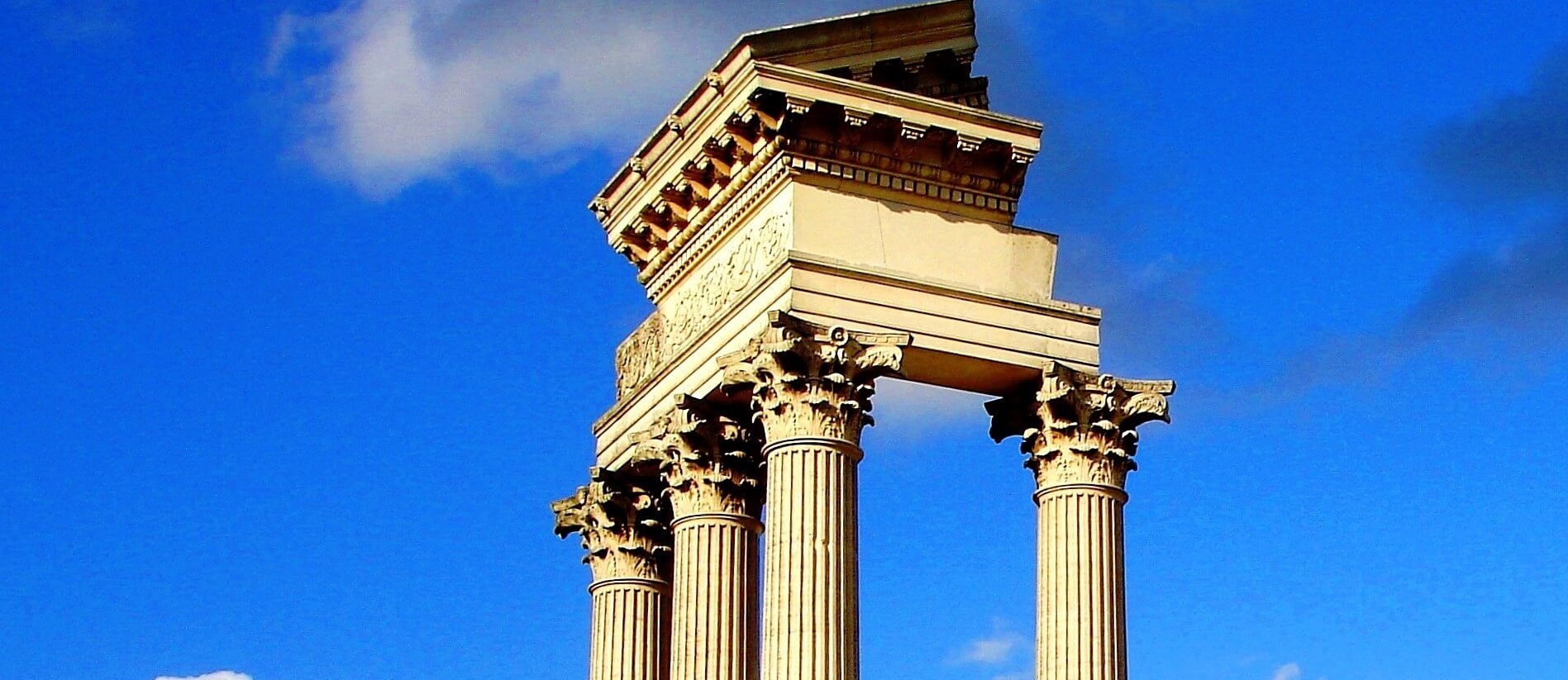
A photo of the columns of the reconstructed harbor temple in the LVR Archaeological Park Xanten.
The Roman Empire

Starting out as a small city state, Rome became a world empire in the course of just under 700 years. But how did the Romans manage to become so powerful? And how come we not all Romans today?


North Rhine-Westphalia in the Roman Empire

What do cherries, the flush toilet, concrete and underfloor heating have in common? All these amenities were the export success stories of an old advanced civilisation - "ancient Rome". Roman legionaries, merchants, craftsmen, traders and settlers brought numerous innovations to the banks of the Rhine. Did all the locals appreciate this? 
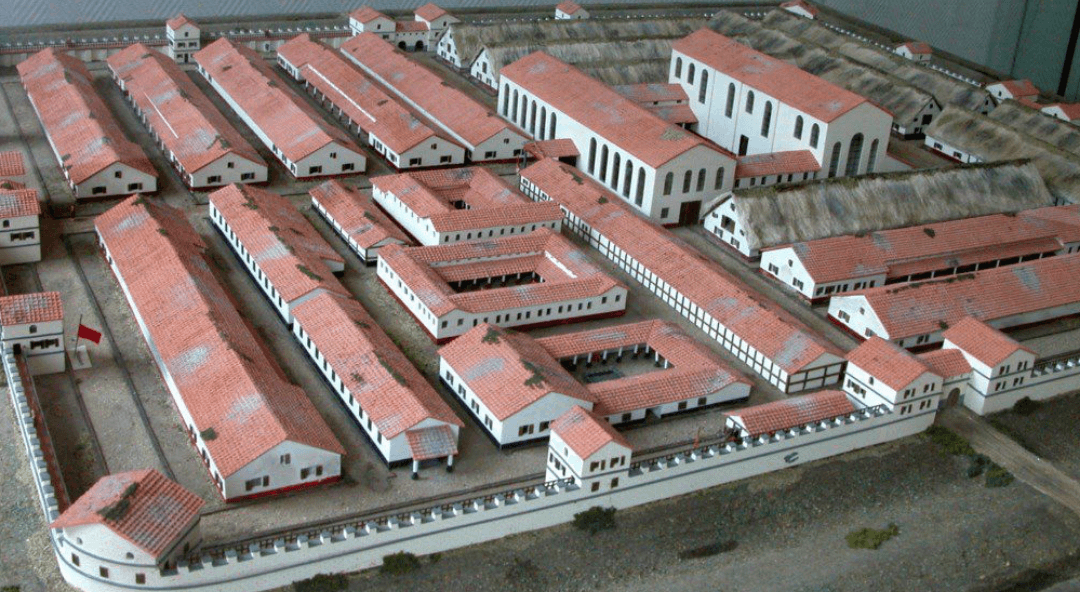
 

Model of the Roman fort Dormagen
The Limes - The borders of the Roman Empire
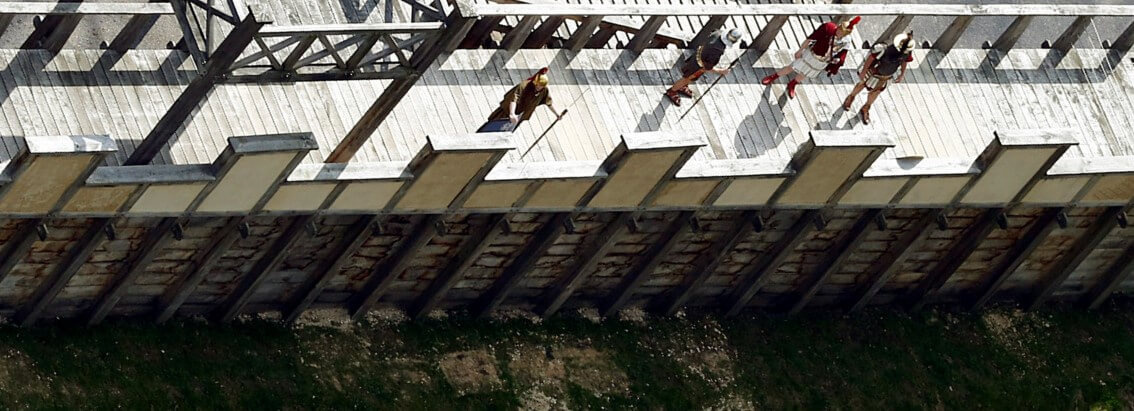
Legionnaires on a reconstructed section of the Roman camp fortification in Roemerpark Bergkamen

The Limes was the border of the Roman Empire. At the time of its greatest expansion, it ran through an area today covered by more than 20 countries and had a total length of 7,500 kilometres. Depending on local conditions, the various sections of the Limes looked quite different from one another. 

In the North, large parts of the Limes ran along the Rhine, Main and Danube rivers. It was a wet frontier protected by a chain of forts and legionnaire encampments. In what is today Germany, there were sections of the Lower Germanic Limes, the Upper Germanic-Rhaetian Limes and parts of the Danube Limes.