
Explore the
Romans

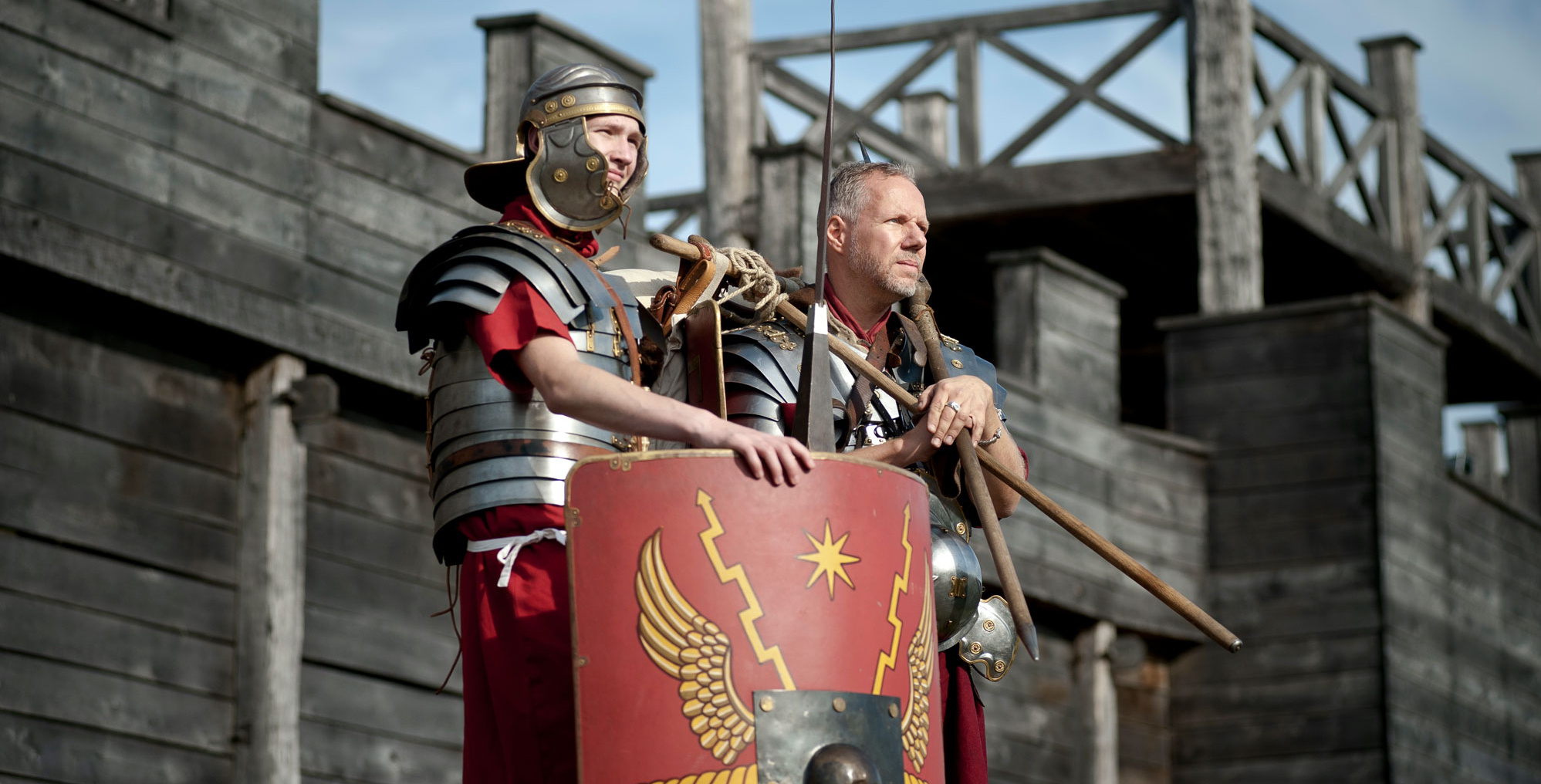
Twee legionairs op wacht in het Romeinse kamp Haltern

Whether through towns, streets or buildings - the Romans left their mark on North Rhine-Westphalia for almost 500 years. This is still visible almost everywhere today.

At roemer.nrw you will find everything about life in the Roman era in North Rhine-Westphalia.

Discover exciting archaeological sites, museums and discoveries - and perhaps you will see your own town in a whole new light!


You can not miss this

Clemens Sels Museum Neuss

Am Obertor
41460 Neuss
Deutschland

Das Clemens Sels Museum Neuss zeigt Funde aus 400 Jahren römischer Militärgeschichte. Novaesium, das antike Neuss, ist der älteste römische Militärstandort am Niederrhein. International bekannt ist das Legionslager, das der Neusser Archäologe Constantin Koenen Ende des 19. Jahrhundert ausgrub. Herausragende Bildzeugnisse römischer Auxiliarsoldaten sind die Grabsteine der Feldzeichenträger Oclatius und Pancuius.

N 51°11'40" E 6°41'55"
> Learn more

Abschnitt Via Belgica, römische vici, Straßenstation

L 136
52457 Aldenhoven
Deutschland

Vier Kilometer langer Abschnitt der römischen Via Belgica durch das heutige Aldenhoven, der exakt dem antiken Straßenverlauf entspricht.

N 50°52'43" E 6°14'6"
> Learn more

Marschlager

Senner Hellweg
33689 Bielefeld-Sennestadt
Deutschland

Römisches Marschlager aus augusteischer Zeit mit sichtbaren Resten der Wall-Graben-Anlage. Seine Größe war ausreichend für drei legionen, Auxiliareinheiten und Tross.

N 51°57'34" E 8°35'20"
> Learn more

Grabkammer

Kaulardstraße 2
50354 Hürth-Efferen
Deutschland

Grabkammer aus Tuffstein mit Sarkophagen, wohl aus dem 3.-4. Jh. n. Chr.Bild: Geolina163 via Wikimedia Commons

N 50°53'38" E 6°54'15"
> Learn more

Sarkophag

zwischen Jahnwiese und Adenauer-Weiher
50933 Köln
Deutschland

Sarkophag mit Spuren von Grabräubern; zugehörig zur Müngersdorfer Villa rustica, die sich im Bereich der Jahnwiesen erstreckt.

N 50°56'40" E 6°52'21"
> Learn more

Dionysos-Mosaik, Römisch-Germanisches Museum der Stadt Köln

Roncalliplatz 4
50667 Köln
Deutschland

Mosaik im Hauptraum eines großen römischen Peristylhauses, seit 1946 zugänglich, mit Eröffnung 1974 ins Römisch-Germanische Museum (Stammhaus) integriert.

N 50°56'26" E 6°57'29"
> Learn more

Römer-Lippe-Route

Kooperationsgemeinschaft Römer-Lippe-Route
c/o Ruhr Tourismus GmbH (RTG), Centroallee 261
46047 Oberhausen
Deutschland

Die Römer-Lippe-Route verbindet auf ihrer 295 km langen Hauptroute vom Teutoburger Wald bis zum Niederrhein fünf Regionen in einem der abwechslungsreichsten Bundesländer Deutschlands. Die Lippe hat die Gebiete und Bewohner entlang ihrer Ufer zu allen Zeiten nachhaltig geprägt, und schon die Römer erkannten ihre strategische Bedeutung. Sie errichteten zahlreiche Lager entlang des Flusses, deren Spuren heute noch an vielen Stellen der Römer-Lippe-Route zu sehen sind.

N 51°28'45" E 6°52'46"
> Learn more

Matronentempel

Krausstraße 2, Zingsheim
53947 Nettersheim
Deutschland

Überreste/Teilrekonstruktion des Matronentempels "Vor Hirschberg"

N 50°30'33" E 6°39'21"
> Learn more

Kastell

Marktplatz 11
52428 Jülich
Deutschland

N 50°55'20" E 6°21'27"
> Learn more

Abschnitt Via Belgica, villa Rustica

In der Widdau, Dechant-Hansen-Allee
50226 Frechen
Deutschland

Die Via Belgica war die römische Fernstraße von Köln nach Boulogne-sur-Mer. Etwa 60 Kilometer der Straße liegen im heutigen Rheinland. Sie verläuft von dort durch die niederländische Provinz Zuid Limburg über die Wallonie in Belgien bis zur Küste an den Ärmelkanal.

N 50°56'23" E 6°45'31"
> Learn more
Do you know more Römer offers?

We look forward to receiving your tips and photos to
roemer [at] mhkbd.nrw.de (roemer[at]mhkbd[dot]nrw[dot]de) !
Romans in North Rhine-Westphalia
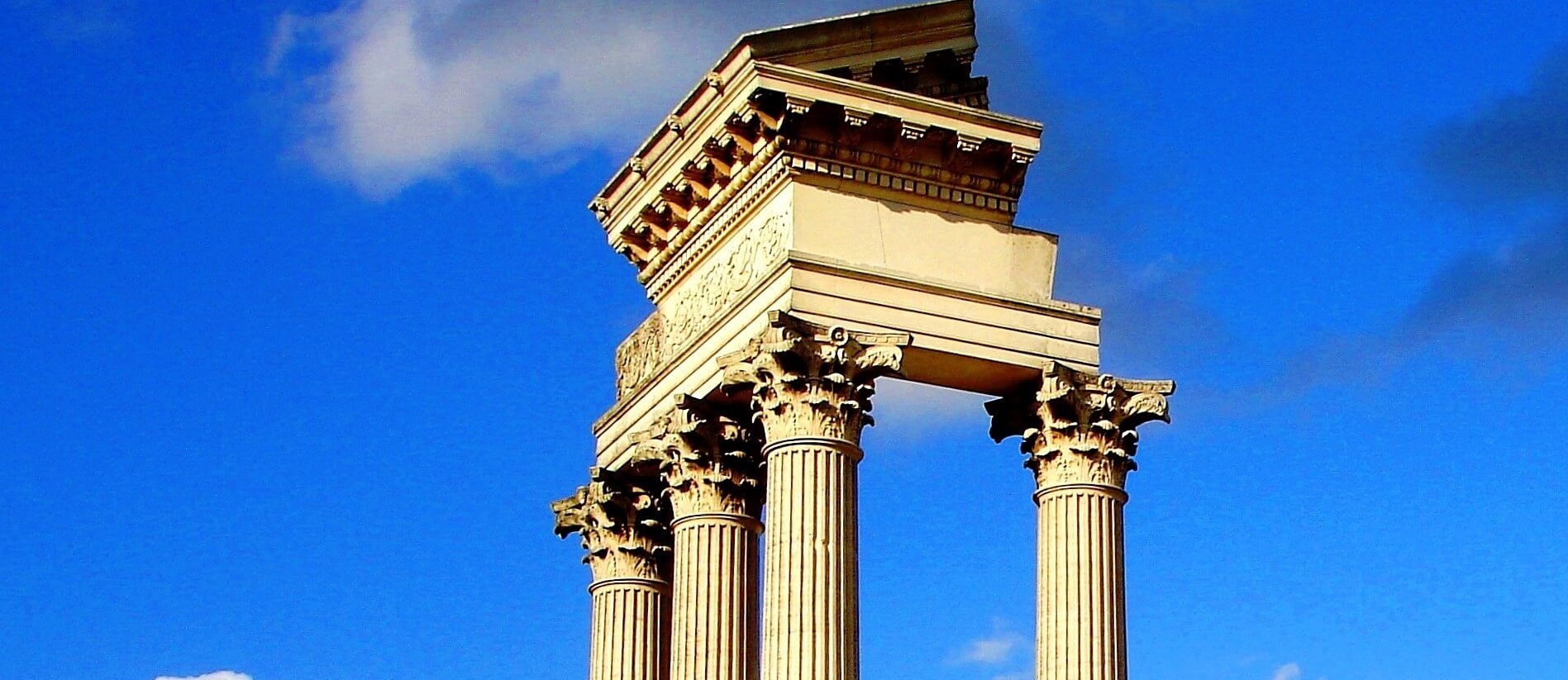
A photo of the columns of the reconstructed harbor temple in the LVR Archaeological Park Xanten.
The Roman Empire

Starting out as a small city state, Rome became a world empire in the course of just under 700 years. But how did the Romans manage to become so powerful? And how come we not all Romans today?


North Rhine-Westphalia in the Roman Empire

What do cherries, the flush toilet, concrete and underfloor heating have in common? All these amenities were the export success stories of an old advanced civilisation - "ancient Rome". Roman legionaries, merchants, craftsmen, traders and settlers brought numerous innovations to the banks of the Rhine. Did all the locals appreciate this? 
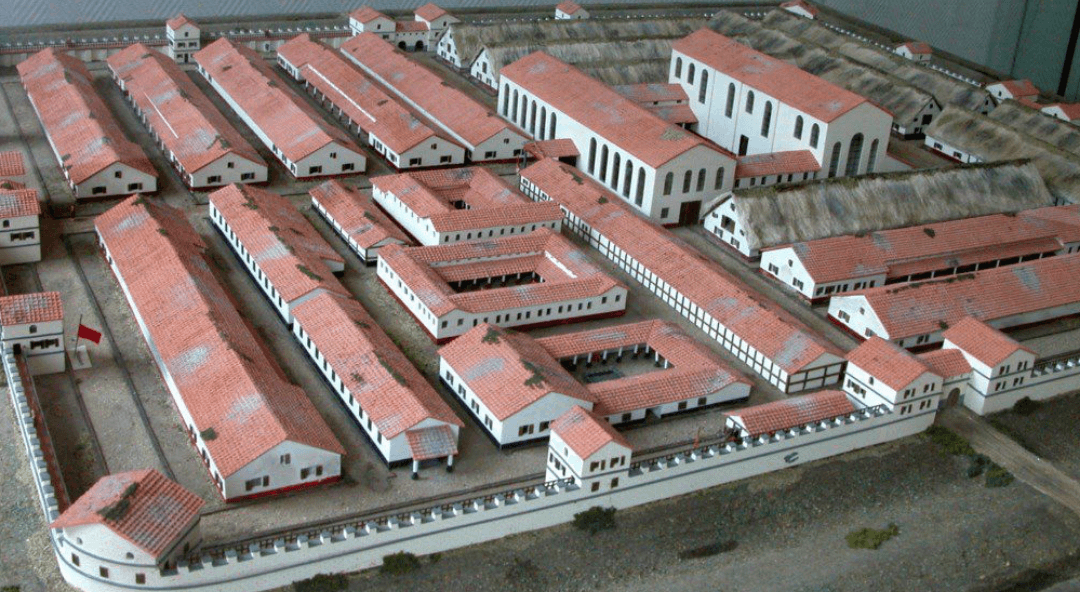
 

Model of the Roman fort Dormagen
The Limes - The borders of the Roman Empire
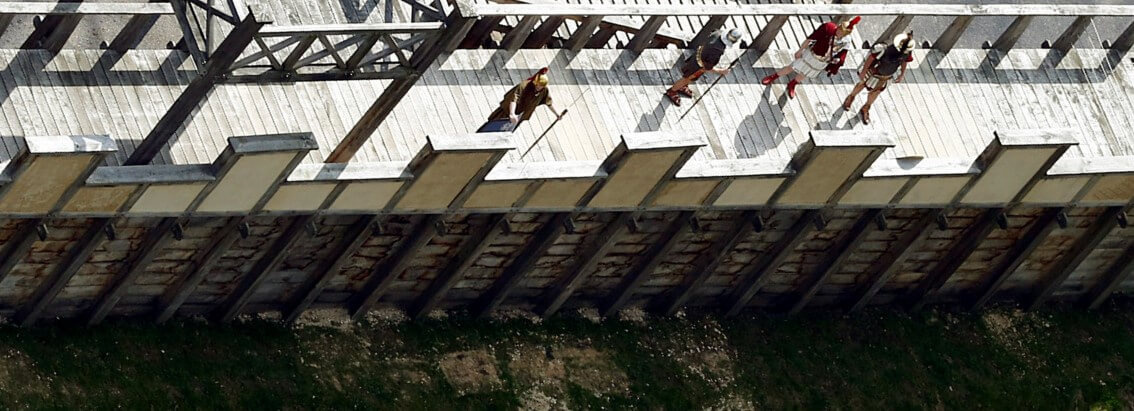
Legionnaires on a reconstructed section of the Roman camp fortification in Roemerpark Bergkamen

The Limes was the border of the Roman Empire. At the time of its greatest expansion, it ran through an area today covered by more than 20 countries and had a total length of 7,500 kilometres. Depending on local conditions, the various sections of the Limes looked quite different from one another. 

In the North, large parts of the Limes ran along the Rhine, Main and Danube rivers. It was a wet frontier protected by a chain of forts and legionnaire encampments. In what is today Germany, there were sections of the Lower Germanic Limes, the Upper Germanic-Rhaetian Limes and parts of the Danube Limes.